7 silica aerogel experiments: explore “frozen smoke” at home and in class
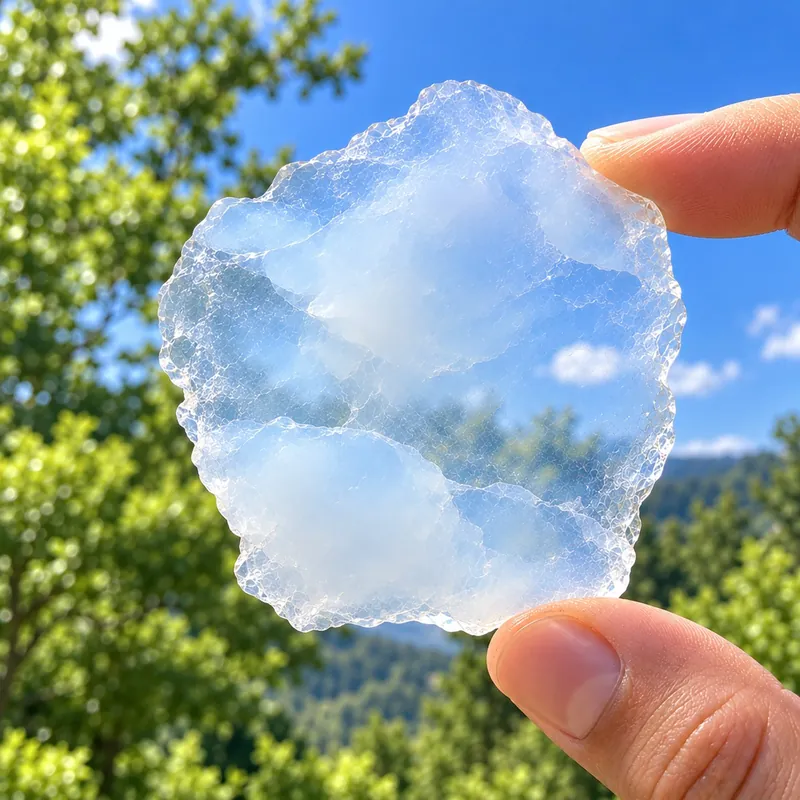
Silica aerogel, nicknamed “frozen smoke”, is the lightest solid in the world. A few pieces are all it takes to see light, water and heat in a new way. Here are 7 simple experiments, explained step by step, from primary school to upper secondary.
Handle aerogel with clean, dry hands or thin (nitrile) gloves: its dust dries out the skin.
Do not breathe in the dust or rub your eyes; in the classroom, provide safety glasses.
Do not put it in your mouth, and keep it out of reach of young children.
Children should do the experiments under adult supervision, especially the one with hot water.
After use, put the pieces back in their tightly closed jar: you can use them again for other experiments.
The 7 experiments
Each experiment needs one or two pieces and very little equipment. You can run them one after another in a one-hour session.
1
1/7 — Reading through a cloud
Level : Primary school and up
Time : 5 min
You will need
A piece of aerogel, a book or a map.
What to do
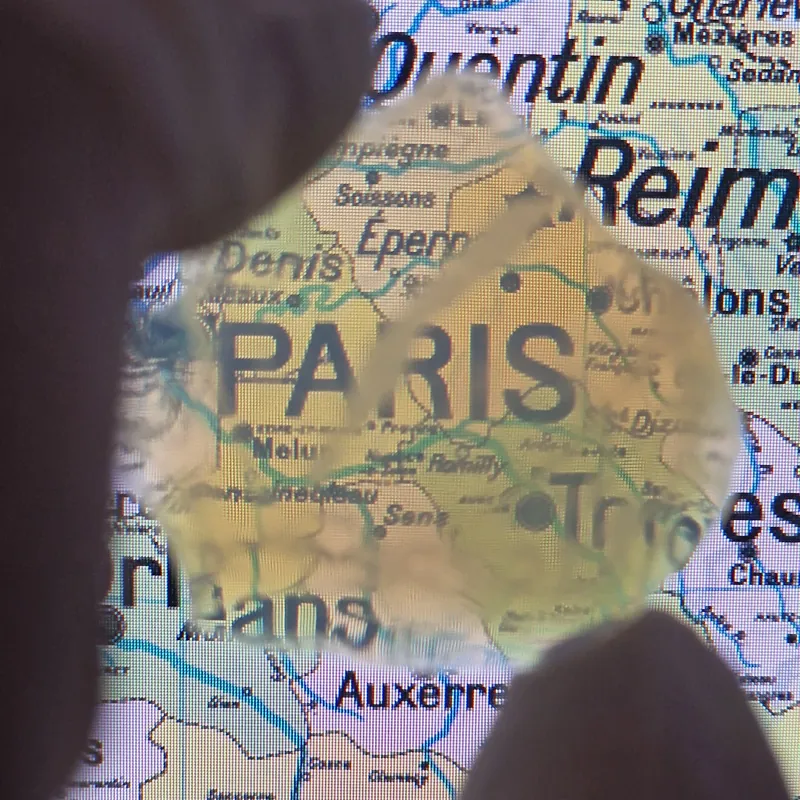
Lay the piece flat on a text or a map, then gently lift it a few centimetres.
What you observe
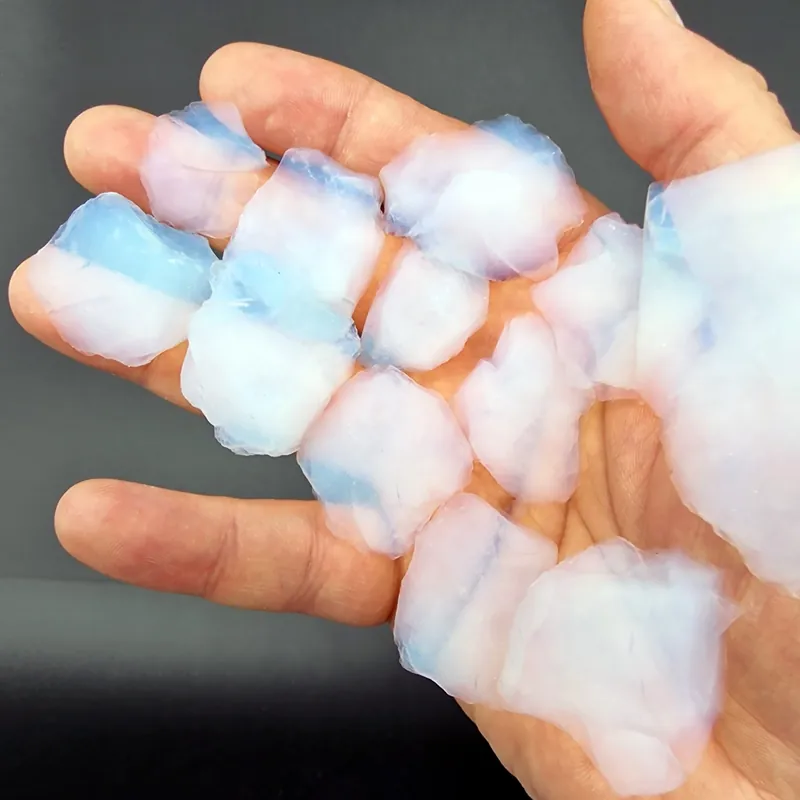
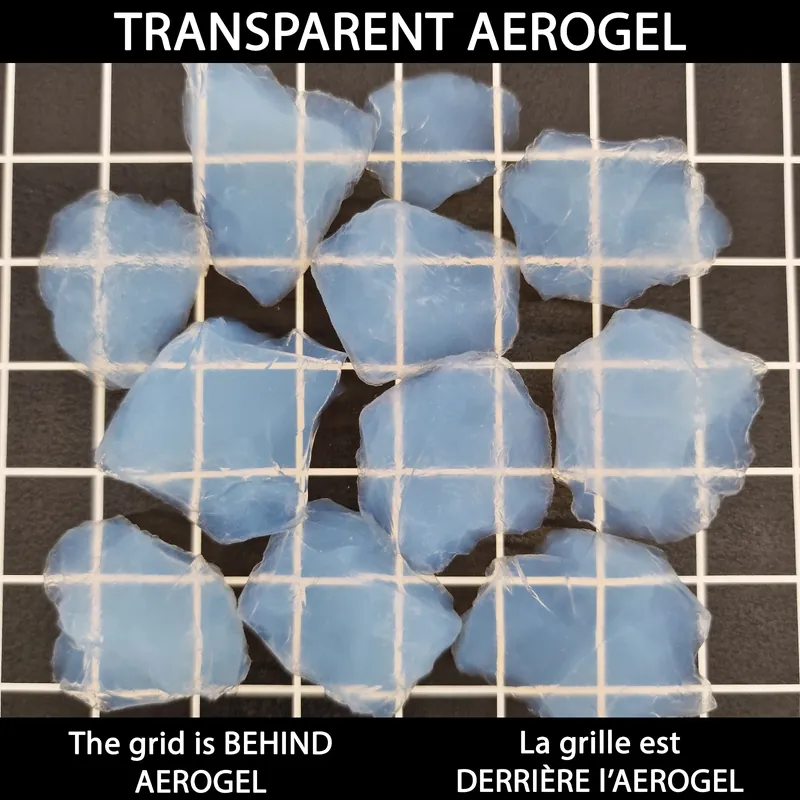
The letters stay readable through the piece, with a faint blue haze. The further you lift it from the text, the blurrier the image becomes.
The explanation
Aerogel is more than 99% air, trapped in a silica network whose pores measure just a few nanometres: far smaller than the wavelength of visible light. So light passes through it almost without being deflected. It is a transparent solid made almost entirely of air.
2
2/7 — Blue sky and orange sunset
Level : Primary school and up
Time : 10 min
You will need
A piece of aerogel, a sheet of black paper, a torch (or light from a window).
What to do
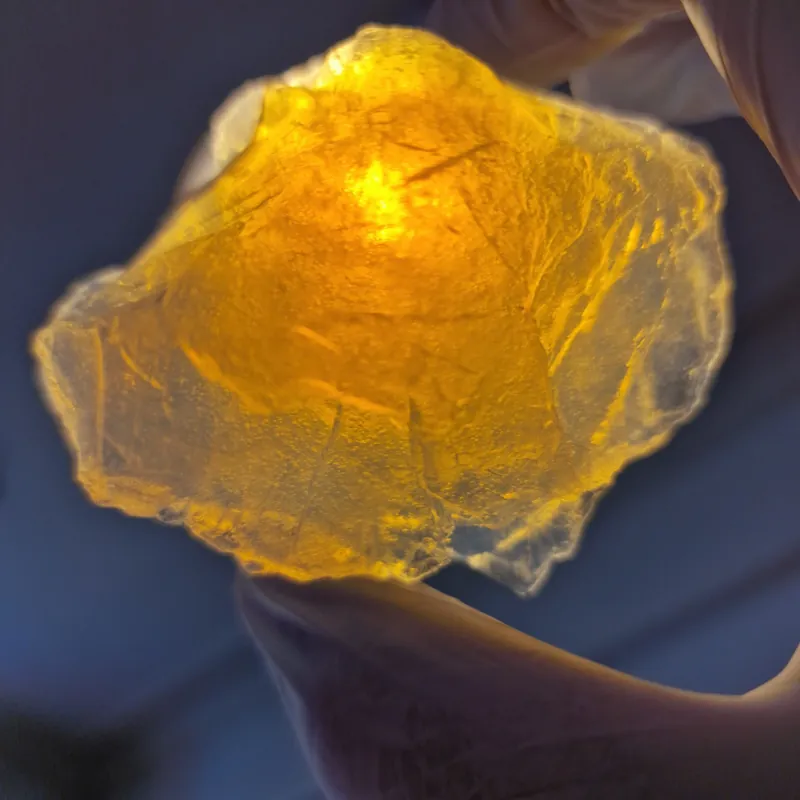
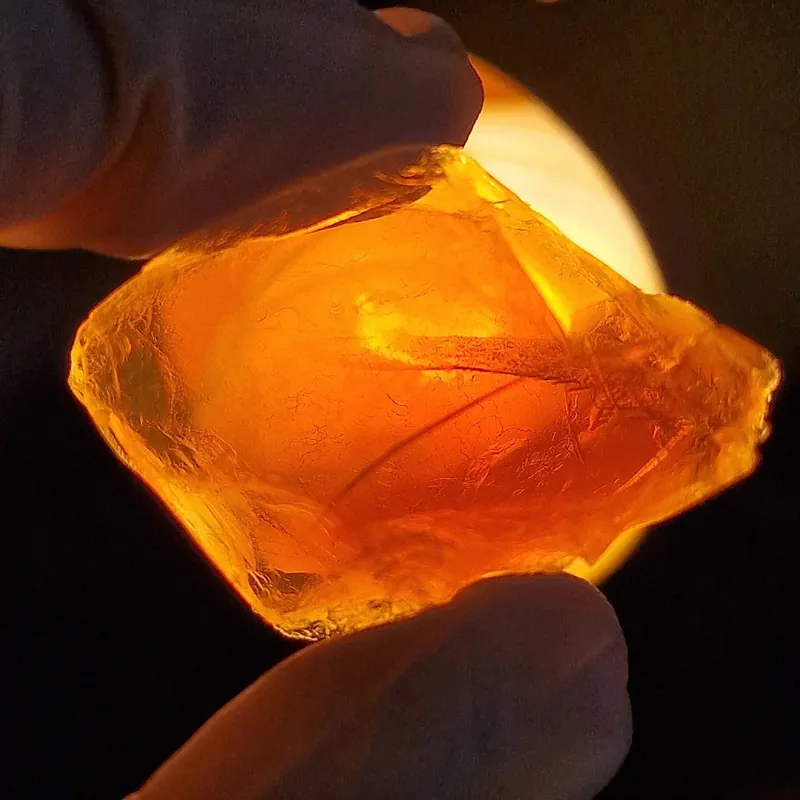
Place the piece on the black sheet, lit from the side, and look at its colour. Then put the torch behind the piece and look at the light shining through it.
What you observe
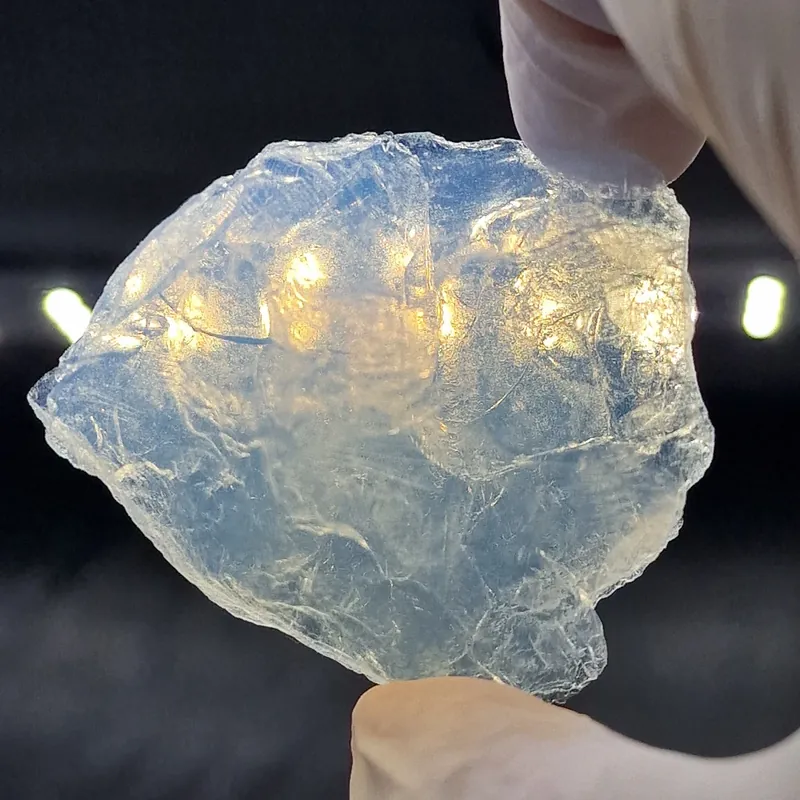
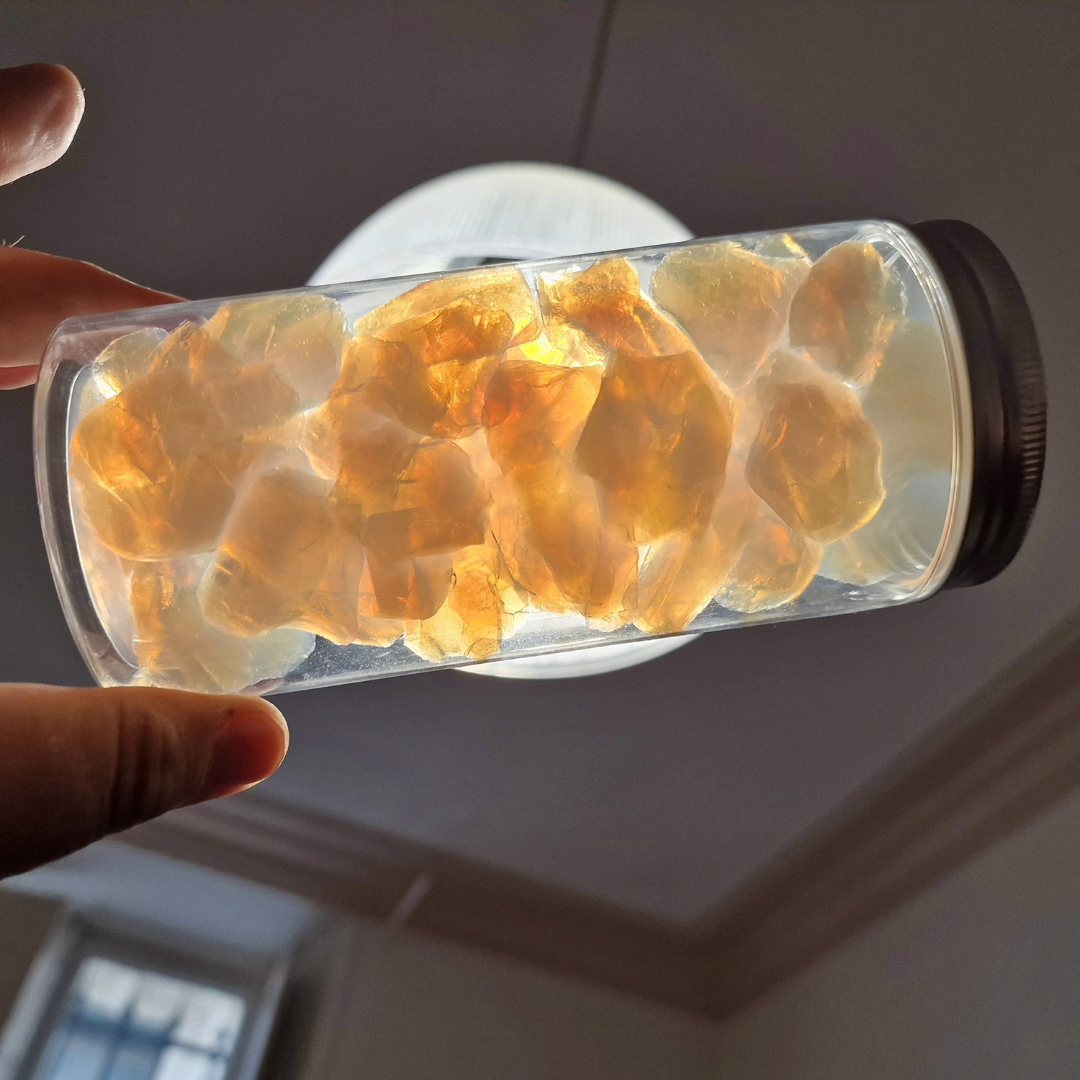
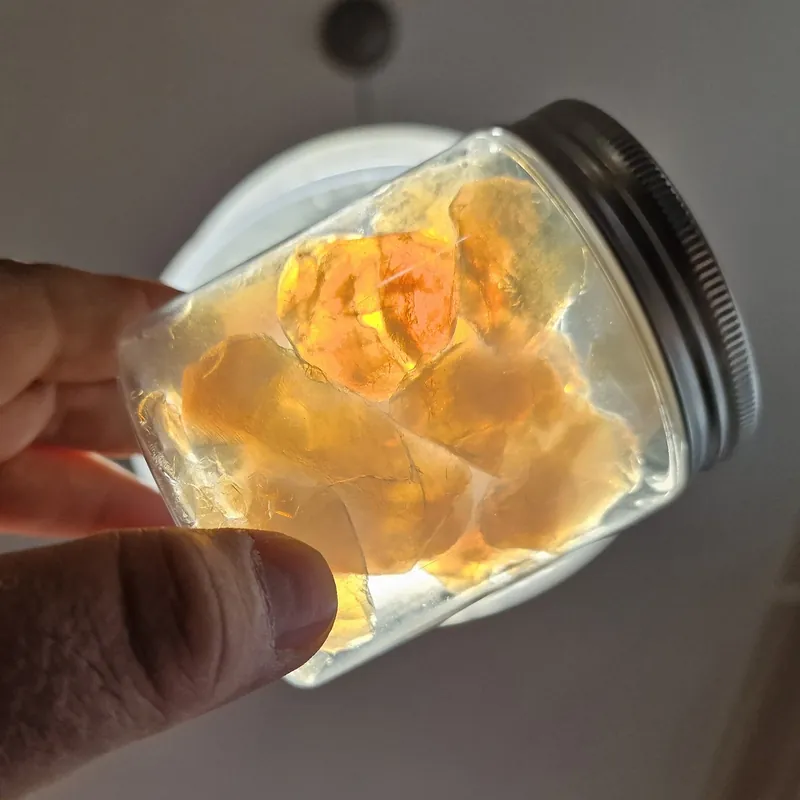
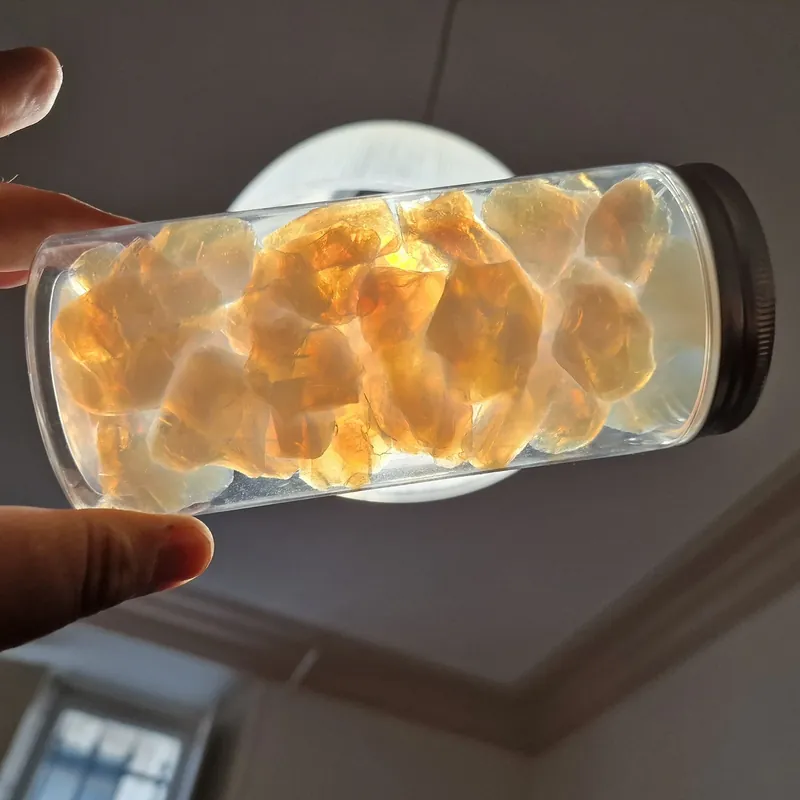
Against the black background, the aerogel looks bluish. When backlit, the light passing through it takes on a yellowish-orange tint.
The explanation
The tiny pores in aerogel scatter blue light more than red: this is Rayleigh scattering, the phenomenon that makes the sky blue. The light that passes through the piece has lost some of its blue, so it looks orange, like the light of the setting sun, which travels through a great thickness of atmosphere.
3
3/7 — The beading drop
Level : Primary school and up
Time : 5 min
You will need
A piece of aerogel, a dropper or a straw, a glass of water, a sugar cube or a piece of paper for comparison.
What to do
Place a drop of water on the aerogel, then another on the sugar or paper. Gently tilt the piece of aerogel.
What you observe
On our aerogel, the drop stays round like a pearl and rolls off when you tilt it. On the sugar or paper, it is soaked up immediately.
The explanation
Our aerogel is hydrophobic: its surface carries chemical groups that repel water. The drop cannot wet the surface, so it keeps its spherical shape. In upper secondary, students can photograph the drop side-on and measure its contact angle with a protractor: the larger the angle, the more hydrophobic the surface.
4
4/7 — A solid that floats
Level : Primary school and up
Time : 5 min
You will need
A small piece of aerogel, a bowl of water, kitchen paper.
What to do
Carefully place the piece on the surface of the water. After a few seconds, take it out and put it on kitchen paper.
What you observe
The piece floats, sitting very high on the water, and comes out dry.
The explanation
It floats for two reasons: it is much less dense than water and, because it is hydrophobic, water does not enter its pores. There is no need to leave it soaking: a few seconds are enough for the experiment.
5
5/7 — The heat shield
Level : Lower secondary and up, with an adult
Time : 10 min
You will need
A fairly flat piece of aerogel, two squares of chocolate, a saucer, a bowl of very hot water.
What to do
Place the saucer on the bowl of very hot water. Put one square of chocolate directly on the saucer, and the other on the piece of aerogel, which also sits on the saucer. Wait a few minutes.
What you observe
The chocolate placed directly on the saucer softens and then melts; the one on the aerogel stays hard for much longer.
The explanation
Heat travels through aerogel very poorly: the air is trapped in pores so small that it can hardly move, and the silica skeleton is extremely thin. It is one of the best thermal insulators known: it has been used to insulate rovers sent to Mars.
6
6/7 — Lighter than you think
Level : Primary school and up
Time : 10 min
You will need
A piece of aerogel, a precision scale (to 0.01 g, like a jeweller’s scale), an object of the same size for comparison: an eraser, a sugar cube, an ice cube.
What to do
Pick a piece of aerogel and an object of similar size. Guess which one is heavier, then weigh them one after the other.
What you observe
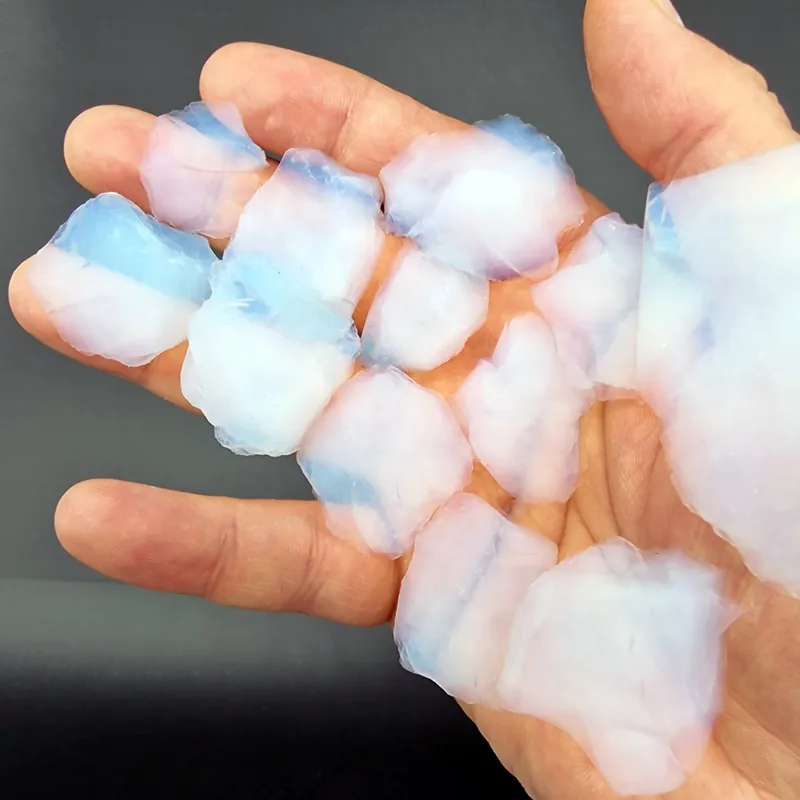
For the same size, the aerogel is far lighter: the scale shows barely a few tenths of a gram, or even less, whereas the eraser or the sugar weighs several grams.
The explanation
More than 99% of its volume is taken up by air. The solid matter, silica (the main component of sand and glass), forms only a very fine skeleton. That is why it is nicknamed “frozen smoke”.
7
7/7 — Calculate its density
Level : Secondary school
Time : 20 min
You will need
A piece with fairly regular faces, a ruler or a calliper, a scale accurate to 0.01 g, a calculator.
What to do
Measure the length, width and thickness of the piece in centimetres and calculate its volume. Weigh it in grams. Divide the mass by the volume: this gives the density in g/cm³.
What you observe
You get a value far below that of water (1 g/cm³) and nowhere near that of glass (about 2.5 g/cm³), even though aerogel is made of the same silica as glass.
The explanation
Density compares an object’s mass with the space it takes up. Aerogel’s density is low because it contains hardly any matter. As the pieces are irregular, the result is an estimate: take several measurements and compare the results between groups.
For teachers
Aerogel makes often abstract concepts tangible. A few ideas for using it in class:
Primary school
States and properties of matter: can a solid be made of air? Observing, sorting, comparing masses.
Lower secondary
Density, flotation, heat conduction and thermal insulation, the scientific method.
Upper secondary
Light scattering, the structure of matter at the nanoscale, innovative materials, measurement and uncertainty.
Workshops and museums
Science fairs and science weeks, science clubs, fab labs: an object that instantly draws in curious minds.
For a demonstration in front of the class, the 250 ml jar is enough. To have several groups working at the same time, choose the 500 ml jar and share out the pieces.
Ordering for a school or institution? Pay online or request a quote to pay by invoice (purchase order, bank transfer).
Silica aerogel pieces – 250 ml and 500 ml jarsUltra-light, translucent silica aerogel pieces: transparency test on a grid and through text, amber glow when backlit, 250 ml and 500 ml jars.Watch on YouTube Download (MP4)
Aerogel on video
Transparency, lightness, blue and orange glints: take a close look at aerogel before doing your own experiments.
Ready to experiment?
Both jars contain the same hydrophobic aerogel; only the quantity changes. Ships from France within 24/48 h.
No, as long as you follow the safety rules above. Silica aerogel is non-toxic and non-flammable; simply avoid breathing in its dust or putting it in your mouth, and protect your eyes and skin.
Can the pieces be reused?
Yes. None of these experiments destroys the aerogel: after use, dry the pieces if needed and put them back in their closed jar. Only a knock or strong pressure can break them.
How much do I need for a class?
A 250 ml jar (€49.90) is enough for a demonstration; a 500 ml jar (€79.90) lets you share the pieces between several groups.
Does aerogel break easily?
It is fragile: it can be held and set down gently, but it crumbles if you squeeze it or drop it. Handle it with your fingertips, over a table, and keep the small fragments for other experiments.
Ready to hold a cloud in your hand?
Order your jar of silica aerogel: ships within 24/48 h, delivered safely.